
Medium Weight Yarn for Crochet: DK, Worsted & Aran Explained
If there is a comfortable middle ground in the yarn world, this is it!
Not too thin, not too thick and suitable for an enormous range of crochet projects, DK, worsted and Aran yarns are some of the weights you will come across again and again.
They are also where yarn terminology can start getting a little confusing.
Is worsted the same as Aran?
Where does DK fit in?
And if a pattern asks for worsted yarn but you only have DK in your stash, can you use it anyway?
Let’s untangle it all!

What Is Medium Weight Yarn?
Yarn weight refers to the thickness of the yarn strand, rather than the physical weight of your ball of yarn.
The standard yarn weight system runs from 0 to 7.
In this guide, we are concentrating on:
3 – Light / DK
4 – Medium / Worsted / Aran
These are wonderfully versatile yarn weights and a great place to start if you are fairly new to crochet.
The stitches are usually easy to see, the yarn feels comfortable to hold and your project grows quickly enough to keep things interesting.
And, perhaps most importantly, there are SO many gorgeous yarns to choose from!
3 – Light / DK
DK stands for Double Knitting.
Don’t let the name confuse you – you absolutely do not need to be knitting to use it!
DK is slightly thicker than sport weight yarn and slightly thinner than worsted or Aran.
For crochet, it is a fantastic all-rounder.
It gives you enough thickness for good stitch definition without creating an overly heavy fabric.
What can I crochet with DK yarn?
Honestly… quite a lot!
DK is lovely for:
Sweaters and cardigans
Baby clothes
Scarves and shawls
Hats
Cushions
Blankets
Amigurumi
Bags and accessories
It is one of those yarn weights that I am always happy to have waiting in my stash.
Although I’m not sure my yarn stash needs any encouragement…
What hook should I use with DK yarn?
As a rough guide, you will often see crochet hooks around 4,50–5,50 mm paired with DK yarn.
That doesn’t mean you have to use one of those sizes.
A smaller hook can produce a firmer fabric, while a larger hook can create something softer and more drapey.
The project you are making matters just as much as the yarn.
1 – Super Fine, Fingering & Sock Yarn
Moving up one little step brings us to weight 1.
This yarn may be labelled Super Fine, Fingering or Sock depending on the manufacturer and where you live.
And no, sock yarn isn’t only for socks!
Fingering weight yarn is still fine, but it has a little more substance than lace. This makes it a wonderfully versatile option for lightweight crochet.
It is particularly lovely when you want your finished project to have plenty of movement and drape without feeling heavy.
What can I crochet with fingering yarn?
Try it for:
Shawls
Lightweight tops and cardigans
Baby clothes
Scarves
Socks
Detailed accessories
What hook should I use?
A crochet hook somewhere around 2,25–3,50 mm is a useful starting point.
Again, your pattern and your own crochet tension are much more important than the number printed on the yarn label.
4 – Medium / Worsted / Aran Yarn
Move up another weight and we arrive at category 4 – Medium.
This is where you will often see the words worsted and Aran.
Worsted is particularly common in US crochet patterns, while Aran is a familiar term on yarn labels in the UK and Europe.
Both are thicker than DK and produce a more substantial crochet fabric.
They’re wonderful when you want clearly defined stitches and a project with a little more body.
What can I crochet with worsted or Aran yarn?
Try it for:
Blankets
Cushions
Sweaters
Cardigans
Hats
Scarves
Bags
Baskets
Home décor
Amigurumi
It is also a lovely weight for learning new stitches because everything is that little bit easier to see.
What hook should I use?
Somewhere around 5,50–6,50 mm is a useful starting point for many medium weight yarns.
But, as always, your pattern takes priority.
Is DK the Same as Worsted?
No. They are neighbours, but they are not the same yarn weight.
DK is category 3 – Light, while worsted is generally category 4 – Medium.
That means substituting DK for worsted without making any other changes could give you a smaller, lighter finished project.
And going the other way – using worsted when the pattern asks for DK – could make your project larger and heavier.
This might not matter terribly much if you are making a scarf.
If you’re making a fitted cardigan?
It matters!
Is Aran the Same as Worsted?
This is where things become less tidy.
You will often see Aran and worsted grouped together as medium weight yarns, but yarn names are not perfectly standardized between manufacturers and countries.
One company’s Aran may be noticeably thicker than another company’s worsted.
So rather than relying entirely on the word printed on the label, I like to look at several things:
– The yarn weight category
– The recommended hook size
– The gauge
– The metres or yards per ball
– The fibre content
And, if the size of my finished project matters, I make a gauge swatch.
Yes, I’m mentioning the gauge swatch again!
Can I Substitute One Yarn for Another?
Absolutely – but don’t assume two yarns are interchangeable simply because they belong to the same weight category.
Imagine you have found the perfect crochet pattern, but the recommended yarn isn’t available where you live.
First, look for a yarn in the same general weight category.
Then compare the recommended gauge and the length of yarn you get for the weight of the ball.
After that, consider the fibre.
A cotton DK, acrylic DK and wool DK can all behave quite differently once you start crocheting.
Cotton may give you fantastic stitch definition but less stretch.
Wool can be wonderfully warm and elastic.
Acrylic can be practical, versatile and easy to care for.
None is automatically better – it depends on what you are making.
Your Hook Size Isn’t a Rule
Here’s something worth remembering whenever you look at a yarn label.
The recommended crochet hook size is a starting point.
Suppose your DK yarn recommends a 4,50 mm hook.
You might use a smaller hook for amigurumi because you want a dense fabric that doesn’t allow the stuffing to show through.
For a soft scarf, you might prefer a larger hook so the fabric has more movement.
Same yarn.
Different hook.
Completely different fabric!
That’s part of what makes crochet so much fun.
And Yes… Make a Gauge Swatch!
If your project needs to fit, please don’t skip this bit.
Crochet a small sample using the yarn, hook and stitch pattern specified in your pattern.
Measure it.
If you have too many stitches in the required measurement, your stitches are probably too small, so try a larger hook.
If you have too few stitches, your stitches are probably too large, so try a smaller hook.
It may feel like extra work when you are desperate to start your project, but it is considerably less work than finishing half a sweater and discovering it could comfortably fit two people!
Which Medium Weight Yarn Should I Choose?
Think about your finished project rather than simply choosing the prettiest ball on the shelf.
Although choosing the prettiest one is VERY tempting.
Ask yourself:
Do I want the finished fabric to be light or substantial?
Does it need to drape?
Does it need to hold its shape?
Will it be worn next to the skin?
Will it need frequent washing?
Once you start thinking about yarn this way, choosing the right one becomes much easier.
Want to Explore the Other Yarn Weights?
This is Part 2 of my Yarn Weight Guide.
If you want something finer and lighter, head over to Part 1: Thin Yarn for Crochet – Lace, Fingering & Sport Weight Explained.
Or if bigger hooks and fast-growing projects sound more like your cup of tea, continue to Part 3: Thick Yarn for Crochet – Chunky, Super Bulky & Jumbo Explained.
And remember — the numbers and labels are there to help you, not frighten you!
Pick up your hook, make a little swatch and see what your yarn wants to become.
you might also like

Crochet Yarn Weight Guide: Thick yarn
Thick Yarn for Crochet: Chunky, Super Bulky & Jumbo ExplainedBig yarn. Big hooks. Big stitches.And projects that seem to grow before your eyes!What's not to love?If you enjoy cosy blankets, chunky scarves, sturdy baskets and projects where you can really see the...
Crochet Yarn Weight Guide: Thin yarn
Thin Yarn for Crochet: Lace, Fingering & Sport Weight ExplainedHave you ever picked up a beautiful ball of yarn, looked at how thin it is and thought… what on earth am I supposed to crochet with that?If, like me, you love discovering new yarns, sooner or later you are...
Hoooked Jute
When you crochet in super bulky/chunky yarn it definitely counts as a work out! Especially when you work with Hoooked Jute Yarn. The coarse natural material is anything but compliant. Still I am a huge advocate for this as it makes wonderful home decor items.Hoooked...
Finding the Right Crochet Hook: Material
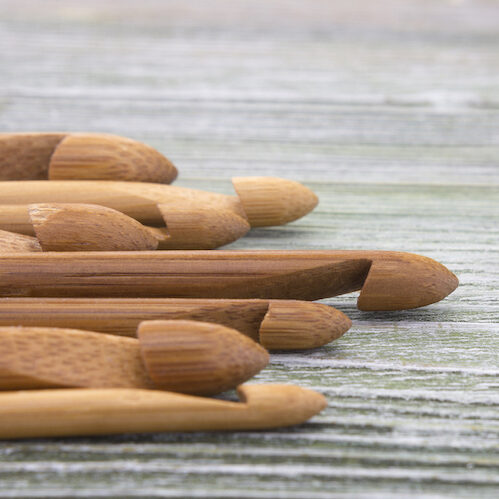
Once you are accustomed to crochet and the movement of the hook, you can focus on finding the right crochet hook in your preferred material. A crochet hook is a tool, but that does not mean it has to be boring. However first things first - the most common...
How to hold your Crochet Hook
Holding a crochet hook correctly is essential for creating smooth and even crochet stitches, ensuring a comfortable and efficient crochet experience. There are a few different methods for holding a crochet hook, and the best one for you may depend on your personal...
Crochet Yarn Weight Guide: Thick yarn
Thick Yarn for Crochet: Chunky, Super Bulky & Jumbo ExplainedBig yarn. Big hooks. Big stitches.And projects that seem to grow before your eyes!What's not to love?If you enjoy cosy blankets, chunky scarves, sturdy baskets and projects where you can really see the...
Crochet Yarn Weight Guide: Thin yarn
Thin Yarn for Crochet: Lace, Fingering & Sport Weight ExplainedHave you ever picked up a beautiful ball of yarn, looked at how thin it is and thought… what on earth am I supposed to crochet with that?If, like me, you love discovering new yarns, sooner or later you are...
Hoooked Jute
When you crochet in super bulky/chunky yarn it definitely counts as a work out! Especially when you work with Hoooked Jute Yarn. The coarse natural material is anything but compliant. Still I am a huge advocate for this as it makes wonderful home decor items.Hoooked...
Finding the Right Crochet Hook: Material
Once you are accustomed to crochet and the movement of the hook, you can focus on finding the right crochet hook in your preferred material. A crochet hook is a tool, but that does not mean it has to be boring. However first things first - the most common...
How to hold your Crochet Hook
Holding a crochet hook correctly is essential for creating smooth and even crochet stitches, ensuring a comfortable and efficient crochet experience. There are a few different methods for holding a crochet hook, and the best one for you may depend on your personal...